Saturday, November 20, 2004

Breaking news: Pacers-Pistons Brawl


I turned from spectator into reporter while watching the Pacers-Detroit game the night of Nov. 20, 2004, when Indiana had a shot at an NBA title before a season-killing brawl at the Palace. On a cold, cold night, I took my wife to the scene and gathered information for a fan-reaction story for USA Today due to the national interest.

And I couldn't find the printout of my online-only work from that era, but I did shoot some video of a very bizarre incident -- an incident that will rank among the most bizarre of my career. Brawl-meister Ron Artest, after he'd been suspended, gave an interview to the Today show to explain his side of things.


He did it at the offices of Indianapolis-based Emmis Communications, where outside fans had gathered. And a radio station at the time had dressed one of its personalities as Piston Ben Wallace and put him in a dunk tank for Artest to try and sink. It's 16 seconds and truly strange.

Wednesday, August 18, 2004

2004 rampage left police officer dead


It was not yet 2 a.m. on Aug. 18, 2004 when the 911 calls started coming in from the Southside. First, Indianapolis police were dispatched to a home on Dietz Street where they found 66-year-old Alice Marie Anderson shot to death. Then callers said a man was stalking the neighborhood with a machine gun, firing indiscriminately. It was Alice Anderson's son Kenneth, who had history of mental problems and owned a lot of guns.

StarFiles: The shooting

As the squad cars began to arrive, he met them with a barrage of automatic weapons fire, shattering windshields. In the darkness, the officers saw muzzle flashes but couldn't tell how many weapons they faced because of the volume of gunfire.

Patrolman Tim Conley was shot in the stomach and leg as he slammed his car into reverse. In another cruiser, Officer Timothy "Jake" Laird was fatally wounded when a round hit him high in the chest just above his protective vest.

Anderson was moving through the neighborhood on foot. At the corner of Tindall Street and Gimber he spotted two more squad cars, took a position behind a jeep and began firing. One of the officers, Peter Koe, was a SWAT team member but had been working a regular shift, so his assault rifle was in the trunk of his cruiser. Already bleeding from the head from the flying glass, Koe managed to get to his gun and was loading it when he was shot in the leg. Koe took cover, then advanced on Anderson's position, both men firing. And both ran out of ammunition at about that point.

Koe was well-trained and knew he had a one-second opportunity. He rushed at Anderson, striking him with the empty rifle as the gunman tried to go for his pistol. Koe had a handgun also, and he was quicker. He fired and Anderson went down, dead, 16 minutes after it all began.

Saturday, March 6, 2004

Help too late for driver in fatal crash

The frantic calls poured in to 911.

"Somebody's going to die if this woman doesn't get stopped!" one caller told a dispatcher.

While behind the wheel of her 1995 Lincoln sedan a week ago today, Dorothy Beasley, 73, had fallen ill shortly after entering I-465 from a Southside exit. Unable to take her foot off the gas pedal, and driving alone, she careened back and forth in her vehicle while traveling east.

Motorists took it upon themselves to create a rolling roadblock behind her. But despite at least a dozen calls to emergency dispatchers, starting just before 11:21 a.m., help arrived too late. Beasley's terrifying journey ended in a one-car crash at 11:29 a.m.

Here was the story.

Tuesday, October 16, 2001

Anthrax brings new bio-terror threat

Within days after the Sept. 11 attacks on the World Trade Center and the Pentagon a new terrorist attack was launched through the U.S. mail. Letters laced with deadly anthrax were sent to media and government targets.

School shutdown: Fear of biohazard contamination enveloped hundreds of students after a powder residue was found beneath gym bleachers at St. Simon the Apostle School, 8155 Oaklandon Road. Firefighters eventually quarantined about 175 people inside the building until the substance was determined to pose no health hazard.

Tuesday, September 11, 2001

Special assignment: 9-11 at the WTC

The most memorable story assignment of my career was at Ground Zero in New York a day after 9-11-01.

Within 24 hours after the World Trade Center was destroyed by terrorists on Sept. 11, 2001, a rescue team from Indiana set out for New York to help. All non-military aircraft were still grounded so the team went by road.

The 62-person crew, sponsored by the Federal Emergency Management Agency, was one of the first specialized search-and-rescue teams to arrive in New York and was in action just 36 hours after two hijacked planes slammed into the World Trade Center.

In New York City, the task force split into two teams that spent 12-hour shifts looking for victims in the rubble of the trade center towers; some members stayed at home base in a nearby convention center, performing support functions.


They were joined by FEMA teams from eight other states that are similarly structured and performed the same missions. The Indiana team was the first to try out remote-control robots that use cameras to search through wreckage.

A Friday night-early Saturday visit to The Pile produced this first-person account of Ground Zero, at night, and remains one of my favorite stories while at the Star.

Monday, February 26, 2001

Homicides haunt Indianapolis' black community

The reminders of Brian Griffie's short life are everywhere. 

His baby pictures cover the walls of his family's home. His neon blue toothbrush, bristles bone-dry, sits on the bathroom shelf. Friends still stop by to borrow his hip hop and R&B compact discs.
And there's the guest book from the 20-year-old's funeral. It's filled with hundreds of signatures. So many people wanted to sign the book, says his father, Fairley Griffie, "we had to add extra pages."
His mother, Sharon Griffie, who leads a teary-eyed, numbing tour of her son's possessions, can't believe her youngest child is gone. 

"Even though my son was shot down," she says, "I know he was loved more than he was hated."
Brian Griffie was one of 66 black males whose life ended violently last year in Marion County. Their deaths serve as a harsh reminder that although the total number of homicides continues to drop, one segment of the community remains at great risk. A black male in the state's largest county is far more likely to become a homicide statistic than anyone else. 

Black males accounted for nearly 60 percent of last year's 112 homicides. That's troubling to many experts because black males account for just 11 percent of Marion County's population. 

The facts of Griffie's death are all too common. He was young -- most of the black males killed in 2000 were younger than 30. And a bullet ended his life -- nearly all of last year's black male homicide victims were fatally wounded by gunfire. And several of the cases -- including Griffie's -- remain unsolved. 

"How do you tell a generation of young people that there's a problem out there and they need to be careful?" asks Lt. Don Bender, who works in the Indianapolis Police Department's youth service branch. 

IPD is trying to boost its contact with young people through its police activities league (PAL). Marion County Sheriff Jack Cottey says he wants more of his officers in schools talking to kids about the dangers of the street. 

"There are choices out there to be made, like PAL, like church activities. How do you do that?" Bender asks. "It's an unanswerable question, I think, until you get parents and a whole segment of society who say they won't accept that from their young people." 

As in past years, most of the violent deaths in 2000 occurred in the city's core.
Although last year's homicide figure is much lower than 1998's record-setting 162 deaths, community leaders say, there's still work to be done. 

Drugs and gang violence were not factors in every killing, but they're still a driving force in too many deaths, officials say. 

"It's not going to change until guns are put down, until people respect each other" enough to find a nonviolent solution to their disputes, and until blacks end "a sad trend," says Joe Simpson, a Northside community activist. 

The Rev. Paul Hooks agrees. 

"The thing is, it hurts so many more people than just the victim," says Hooks, a pastor at Emmanuel Free-Will Baptist Church and a recently retired Indianapolis Public Schools police officer. "It leaves a trail of sadness."
Inside the darkness of their Near-Northside apartment, Brian Griffie's parents know that sadness. They know the angst of unfulfilled dreams. 

Brian Griffie, whose nickname was "Do," had plans: he wanted to marry the mother of his infant son, to get his GED, to go to college. He had applied to work with his dad at a book distribution center.
"It's the missing him, the emptiness, the memories," Fairley Griffie says. "The community, they will never know what he had to offer." 
 
The same could be said of other homicide victims, experts say. 

IPD Assistant Chief James O. Wyatt worries that too many young people -- black and white -- are lured by the easy money of drugs and don't realize how dangerous that lifestyle can be. 

A minimum-wage job at a hamburger joint may not be as attractive as the $500-a-day drug money that can be earned on a street corner, Wyatt says. But, he notes, the minimum-wage job has its own rewards, including the promise of a long, productive life. 

He likes to tell high school students, "You don't have to do what you do." 

Authorities can do some things to reduce the number of homicides, community leaders say. 

Indianapolis funeral home director Robert Hayes thinks police should have the power to check for weapons and confiscate any that are found on any young person. Hayes says he was more vocal three years ago when Indianapolis residents were being slain in record numbers. 

But he still thinks drastic steps must be taken because the fatality rate among blacks and whites ages 22 to 30 was higher than that of any other age group last year. 

"We're just losing too many young people to violence," says Hayes, of Peoples Funeral Home. 

Kenna Davis Quinet, a professor at Indiana University-Purdue University Indianapolis who teaches a homicide class, thinks the unusually high fatality rate of black males is more a matter of money than of race.
"The black community is much more likely to suffer from poverty and all the social disorganization that goes with it," Quinet says. "For communities, families, schools and individuals, we can't fix the homicide problem until we fix the poverty problem." 

Richard Block, a sociology professor at Chicago's Loyola University, says black children are more apt to grow up knowing someone who was a victim of a homicide, and those violent deaths may become ingrained in their culture. 

Hooks believes that culture needs to change. 

He knows firsthand. He handled Griffie's funeral last fall. 

Griffie was shot to death Nov. 7 outside his girlfriend's Westside apartment. He had awakened sometime before 6:30 a.m. to check on his car's wailing alarm. The alarm had gone off several times overnight, but this time the shrill noise woke up Griffie's 5-week-old son. As Griffie's girlfriend tended to the baby, Griffie went outside to investigate. 

Griffie's girlfriend, 19, told police she heard several gunshots. She ran to the street, where she found Griffie lying next to his 1984 Chevrolet Caprice. She told police she saw a dark-colored car speeding away.
Indianapolis police think Griffie was ambushed, possibly by gang members. But they're not sure why. No one has been arrested, and "nobody's talking," IPD Detective Anthony Finnell said. 

Griffie's parents say their son resisted gang membership and wonder whether that led to his death.
Next month, the couple will place a marker on their son's grave. Maybe one day they'll put away his things.
Although their son's death has caused them great anguish, some good has come from something very bad: They frequently see their young grandson, and the killing inspired them to get married after dating for 27 years. 

They want to find their son's killer. They don't want Brian Griffie -- a young black male -- to be remembered only as a statistic. 

"It doesn't matter what color they are," his mother says. 

His father agrees: "It was a selfish, senseless murder." 

Sunday, November 5, 2000

The Allen Blackthorne trial


U.S. District Judge Ed Prado called Allen Blackthorne the "lead organizer" of an elaborate murder-for-hire plot that led to the death of 35-year-old Sheila Bellush in 1997, his ex-wife, in her home in Sarasota, Fla., while her quadruplet toddlers walked in her blood.

Blackthorne was a Texas millionaire who once spent his days on the golf course.

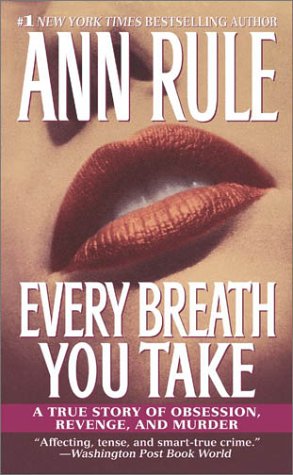
The story - which became a best-seller by Ann Rule - unfolded both in sunny Florida and southern Texas -- San Antonio, the home of Blackthorne and his accomplices. I got to cover his criminal trial. Here are some of the stories in that series:


1-6-2000:
Suspect's life has always been a trial. The man accused of masterminding a murder had a brutal childhood.